
Building an ecommerce site or replacing your current system is not a decision limited to picking software. Choosing the right platform directly affects how smoothly your operations run, your capacity to grow, your customer experience and your costs. In this guide, you'll take an impartial look at the types of ecommerce platforms, their advantages and the criteria for deciding between them.
What Is an Ecommerce Platform?
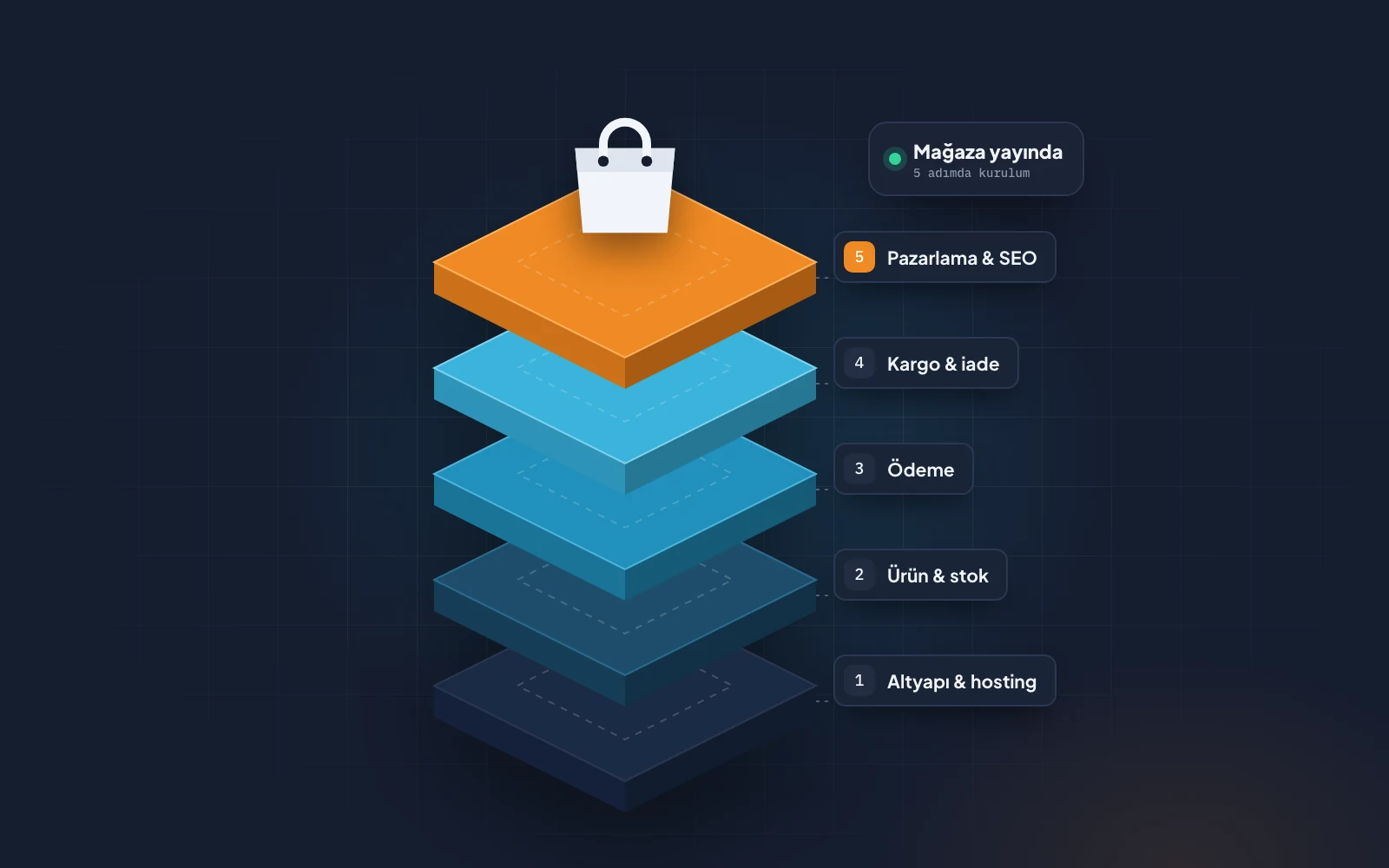
An ecommerce platform is the technological foundation running in the background that powers your online store, manages products and orders, handles payment and shipping processes, and processes customer transactions. A successful ecommerce site relies on components such as product, category, customer account, inventory, order and integration management all working together.
What Types of Platforms Are There?
The platforms used in online retail generally fall into three groups:
- SaaS-based off-the-shelf ecommerce platforms
- Open-source ecommerce systems
- Custom-built ecommerce software
Each approach differs in its technical features, integration options and capacity for customization.
What Is an Off-the-Shelf Ecommerce Platform?
Off-the-shelf ecommerce platforms are cloud-based systems that include all the core functions, with technical processes such as servers, maintenance and security managed by the software provider. Tasks like adding products and stock, tracking orders and setting up promotions from the admin panel require no coding knowledge. Upfront costs are low; software and hosting are usually offered on a monthly or annual subscription model.
Advantages
- No need to deal with the technical infrastructure
- No maintenance or security obligations
- Periodic updates are rolled out centrally
Limitations
- Customization options generally go only as far as the platform allows
- Making deep changes to fit your own business processes can be difficult
- Popular integrations can sometimes come with restrictions
Who Is It Right For?
It's ideal for businesses that want to start selling standard products quickly and have limited technical knowledge and a limited budget.
What Is Custom Ecommerce Software?
With custom software, processes specific to your business, additional features or integrated systems (e.g. ERP, CRM) are developed to your requirements. The custom software development process is more flexible and comprehensive; product management, pricing, order flow and integrations are shaped entirely around you. Technical maintenance and development, on the other hand, are usually the responsibility of the business or a contracted vendor.
Advantages
- Unlimited customization
- Full integration with your existing software and processes
- Access to the source code and full data ownership
Responsibilities
- Maintenance, updates and server management fall on the business
- Requires a technical team or outside support
Ecommerce Platforms Used in Turkey
Popular platforms in Turkey include ikas, Ticimax, IdeaSoft and WooCommerce, while Shopify is a widely used option internationally. Some of these systems are SaaS-based, while others offer open-source or hybrid cloud solutions. Because features, subscription models and integration options can change over time, it's important to base your decision on up-to-date technical documentation and trial periods.
Off-the-Shelf Ecommerce System or Custom Software?
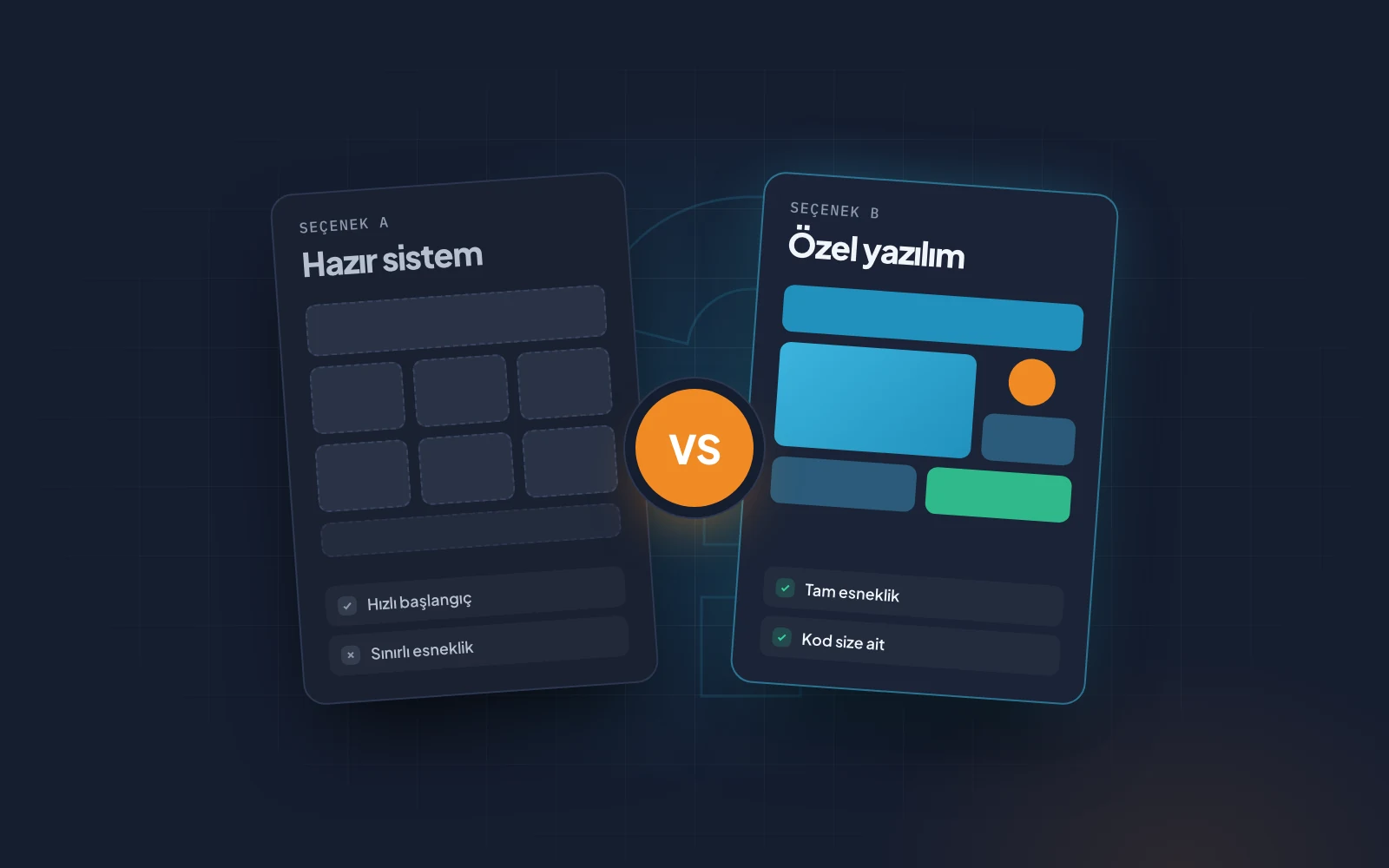
When doing an ecommerce platform comparison, you should consider your business's scale, budget, integration processes and growth goals together. An off-the-shelf ecommerce site suits businesses with a defined product range and standard workflows, while complex sales, multiple warehouses, custom business rules or advanced B2B processes may call for custom ecommerce software.
Comparison Table: Different Ecommerce Platforms
- SaaS-Based Off-the-Shelf Platforms: Low upfront cost, recurring subscription fees, limited customization, some integrations via API, basic SEO tools, generally fast setup, technical maintenance handled by the provider, data portability subject to platform policies, no source code access.
- Open-Source Systems: Moderate upfront cost (setup and customization expenses), community- or plugin-based development, broader customization, wider API and integration options, advanced SEO configuration, performance and maintenance handled by the business, full data ownership, source code access.
- Custom-Built Software: High upfront investment, only contracted support and maintenance costs, unlimited customization, complete freedom in API/system integrations, SEO and performance fully controlled by the business, data ownership and portability held by the business, full access to the source code.
What to Look for When Choosing an Ecommerce Platform
- Product and category management: Are there options for different variants and bulk product uploads?
- Inventory and order tracking: Is it adequate for single-warehouse/multi-warehouse management?
- Customer and promotion management: Does it support personalized pricing, campaigns and promotion setups?
- Reporting and analytics: Can sales, inventory and customer activity be reported in detail?
- User permissions: Can it be managed securely with different users and access levels?
Why Does SEO Matter in an Ecommerce Platform?
SEO capability is critical when choosing an ecommerce platform. For strong ecommerce SEO services, the following
- A clean, manageable URL structure
- Management of category, product and filter pages
- Canonical tag support
- Automatic XML sitemap generation
- Structured data (schema) support
- Mobile compatibility and Core Web Vitals optimization
should be built into the platform at its core.
Marketplace and ERP Integrations
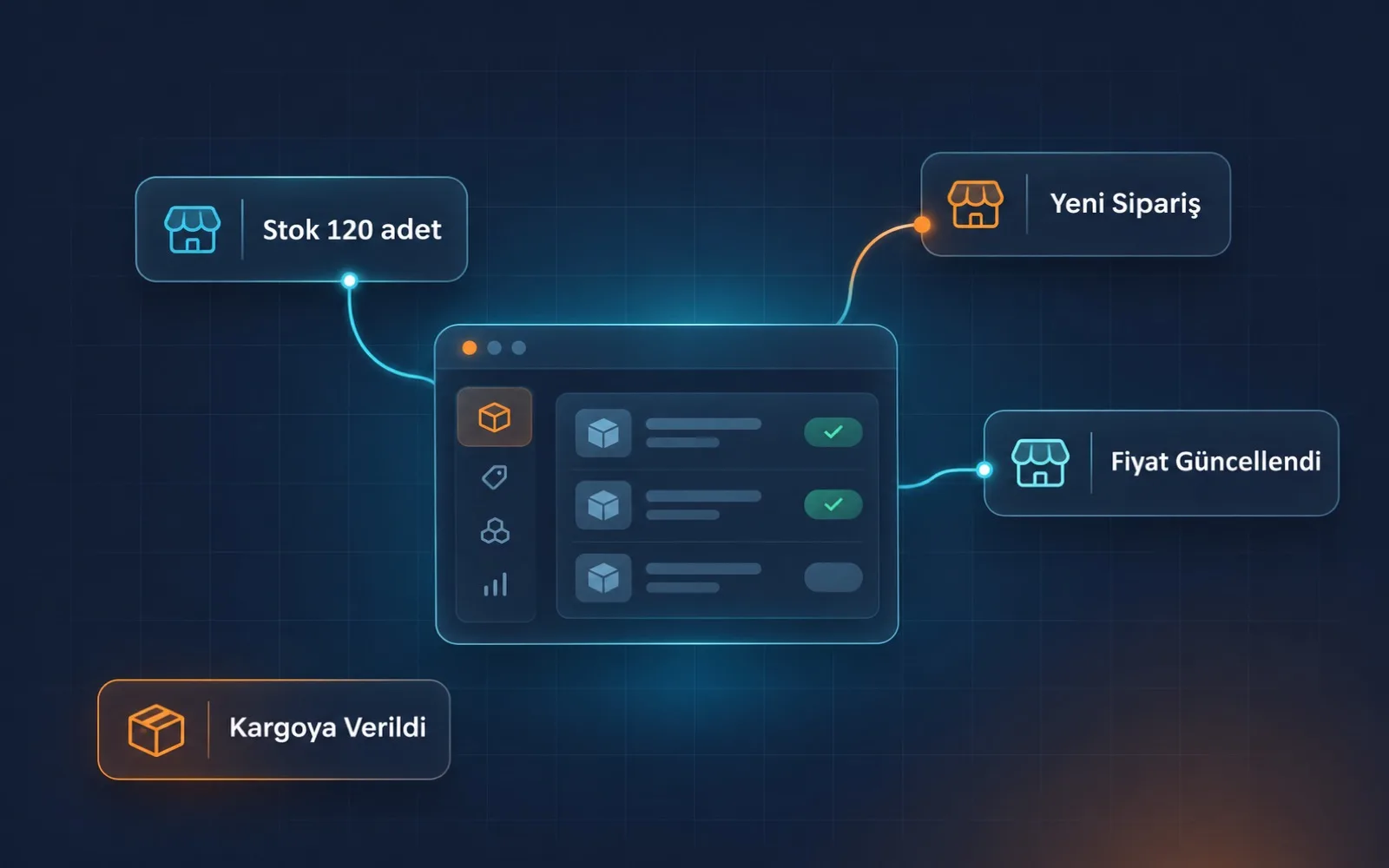
Automatically sharing order, inventory and product data with marketplaces such as Trendyol, Hepsiburada and Amazon, or with ERP/CRM systems, makes things much easier, especially for businesses selling across multiple channels. If custom integrations are needed, API and system integration services become critical for the business.
Payment and Shipping Integrations
Integration with virtual POS, a secure payment infrastructure, various payment providers and shipping carriers streamlines the entire flow from order to collection to delivery. Automatic order status tracking boosts customer satisfaction.
What Determines Platform Pricing?
- License or subscription fees
- Design and custom development costs
- API/integration fees
- Server/hosting costs
- Ongoing maintenance and support needs
- Spending on third-party services
You need to evaluate the total cost of ownership as a whole, based on your scope.
Ecommerce Site Migration and Platform Changes
When moving an existing ecommerce site to a different platform, product, category, customer and order data must be transferred without loss, old URLs must be redirected correctly, and the SEO migration process must be managed carefully. Otherwise, you risk losing rankings and data. Website migration services ensure a safe transition during this process. For details on the setup process, take a look at our How to Build an Ecommerce Website: 2026 Guide.
Performance and Security on an Ecommerce Site
Page speed, caching strategies, a firewall, database security, access permissions, backups and regular updates are essential for SEO, customer experience and data protection alike. With maintenance and technical support, you keep your platform sustainable.
Which Business Should Choose Which Ecommerce Platform?
Boutique Store (Few Products, Standard Needs)
- Recommendation: SaaS-based off-the-shelf ecommerce platforms. Fast setup, affordable costs and enough for the core functions.
Mid-Sized Multichannel Seller (Inventory and Order Syncing)
- Recommendation: A SaaS platform with advanced integration support, or an open-source system. Broad API support and marketplace integrations are critical.
B2B Trading Company (Dealer-Specific Setups, ERP Integration)
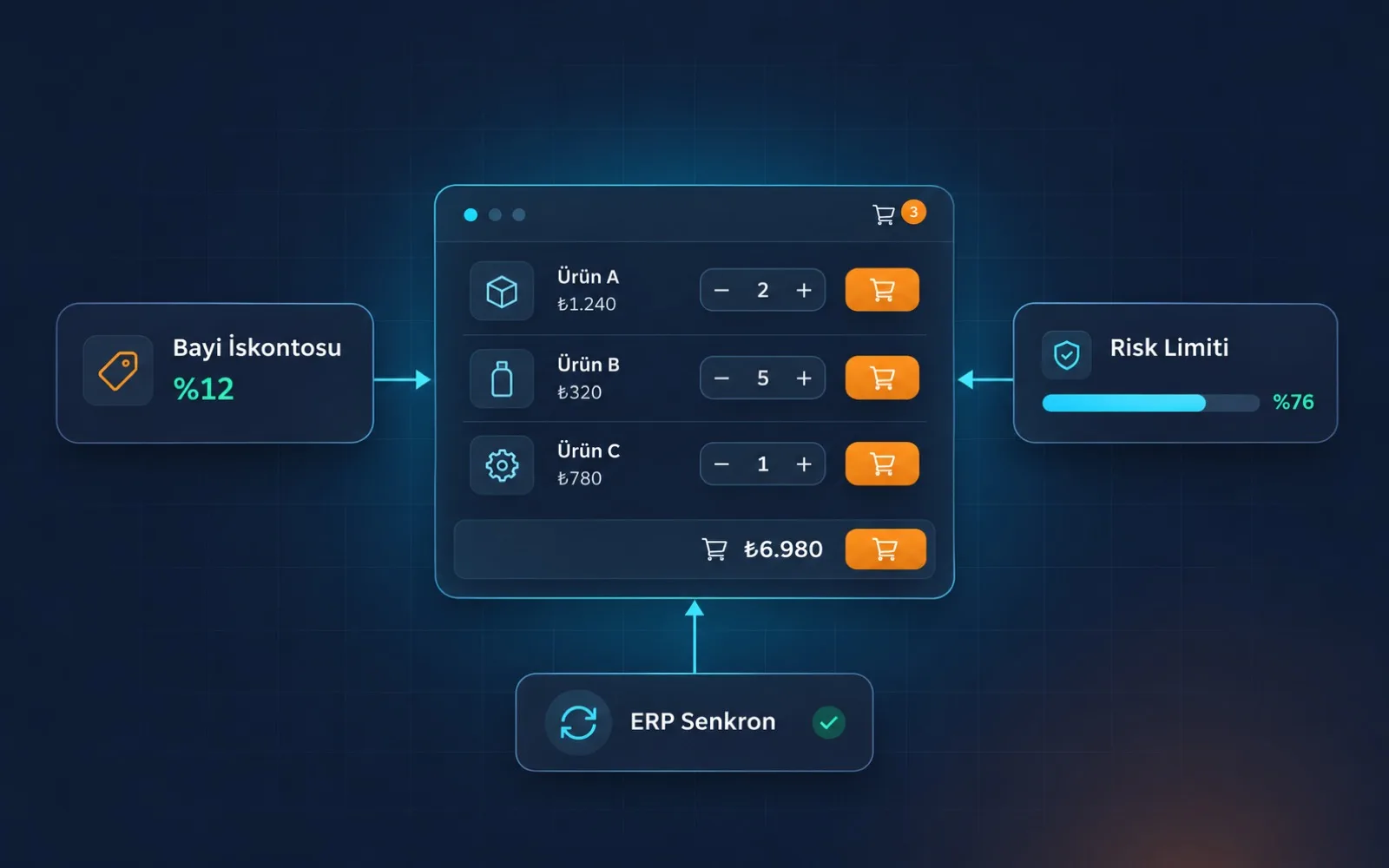
- Recommendation: Custom ecommerce software or a comprehensive open-source-based solution for a full fit with your business processes. Customizability is a must for your own process rules and special pricing. You may also need B2B and dealer portal development.
Common Mistakes When Choosing a Platform
- Focusing only on the upfront price
- Overlooking integration needs
- Not accounting for data portability
- Ignoring growth and changes in workflows
Frequently Asked Questions
- Is there a performance difference between an off-the-shelf ecommerce platform and custom software?
In large projects with growing traffic and transaction volumes, you can generally manage scalability better with custom software. In small, standard projects, however, the difference may be minimal. - Are open-source platforms like WooCommerce secure?
Security depends on keeping the platform up to date, configuring it correctly and maintaining it regularly. - Is changing platforms risky for SEO?
Yes. Without proper redirects and a planned data transfer, you may experience temporary losses in SEO performance. - Where do integration options on off-the-shelf platforms fall short?
You may run into limitations with non-standard business rules or ERP/CRM connections specific to your organization. - Can I have full ownership of all my data?
On off-the-shelf platforms, data portability may be limited to what the platform offers, while open-source and custom software make full ownership possible. - How important are support and maintenance costs?
Support and update needs are among the main cost items. They should be planned in advance to keep the platform sustainable.
Conclusion: How to Choose the Right Ecommerce Platform
The right platform is different for every business. It's not just the upfront price: integration capability, data ownership, scalability and your business needs determine the total cost of ownership. With our Ecommerce Software Development service, we can help you choose a platform that fits your business's unique requirements. Don't skip technical analysis and long-term planning when making the right decision.
Author
Enes Şahin
Writes on the Hun Digital blog