
For many entrepreneurs and businesses that want to sell online, building an ecommerce website involves multiple technical and business steps. Choosing the right model, technology and investment plan matters as much for long-term sustainability as it does for getting ahead of the competition. In this guide, we walk anyone getting into ecommerce through every stage of the process and the cost items to plan for in 2026.
Building an Ecommerce Website: Where Should You Start?
The most important first step in building an ecommerce website is defining the right business and sales model for the products or services you want to sell. There are different models, such as manufacturing under your own brand, reselling products you source, dropshipping or selling on a marketplace.
Depending on the model you choose, the software platform, workflow and legal processes can change. For example, an entrepreneur who wants to open a boutique store may only need a simple, visually focused setup with product management and inventory tracking.
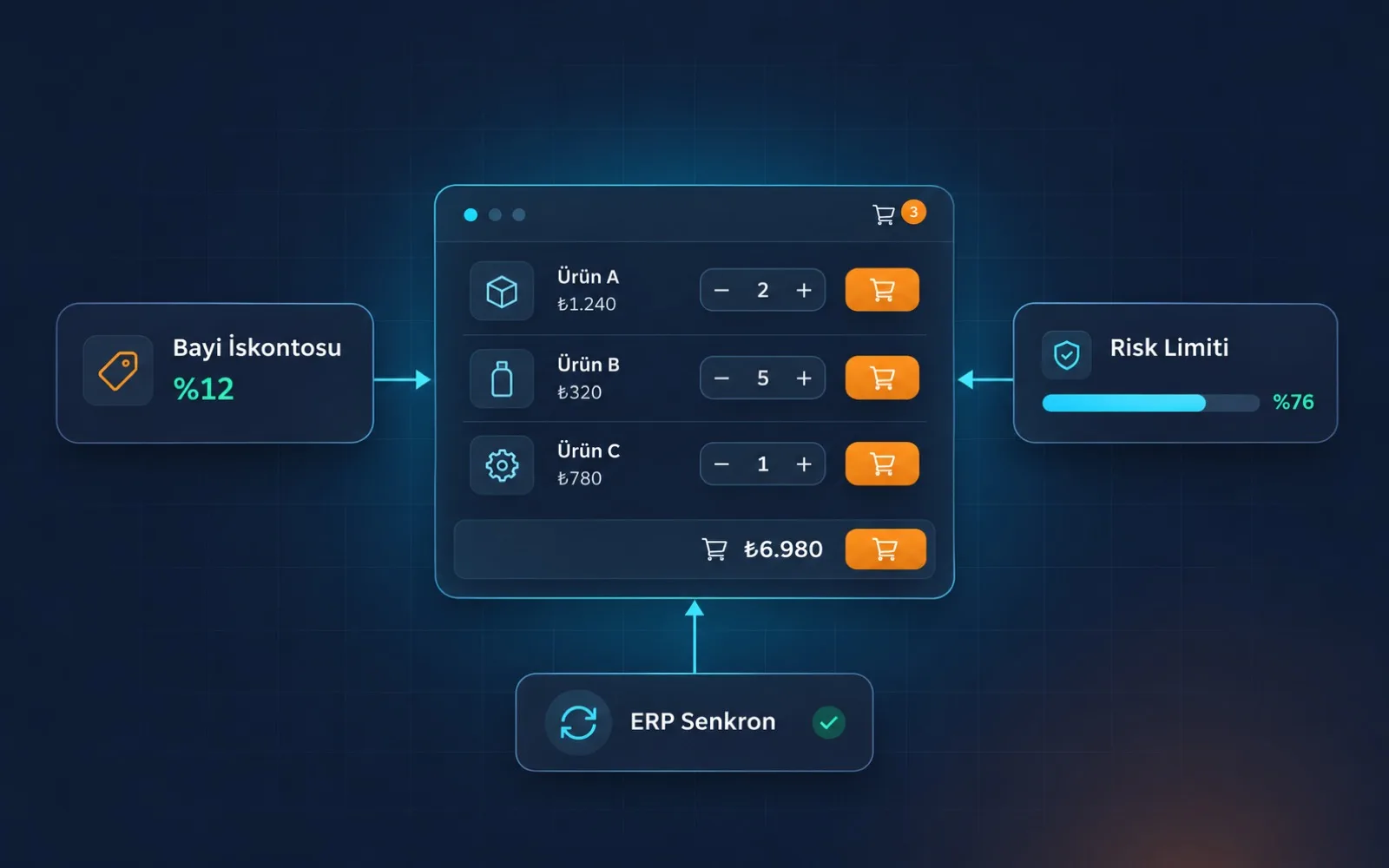
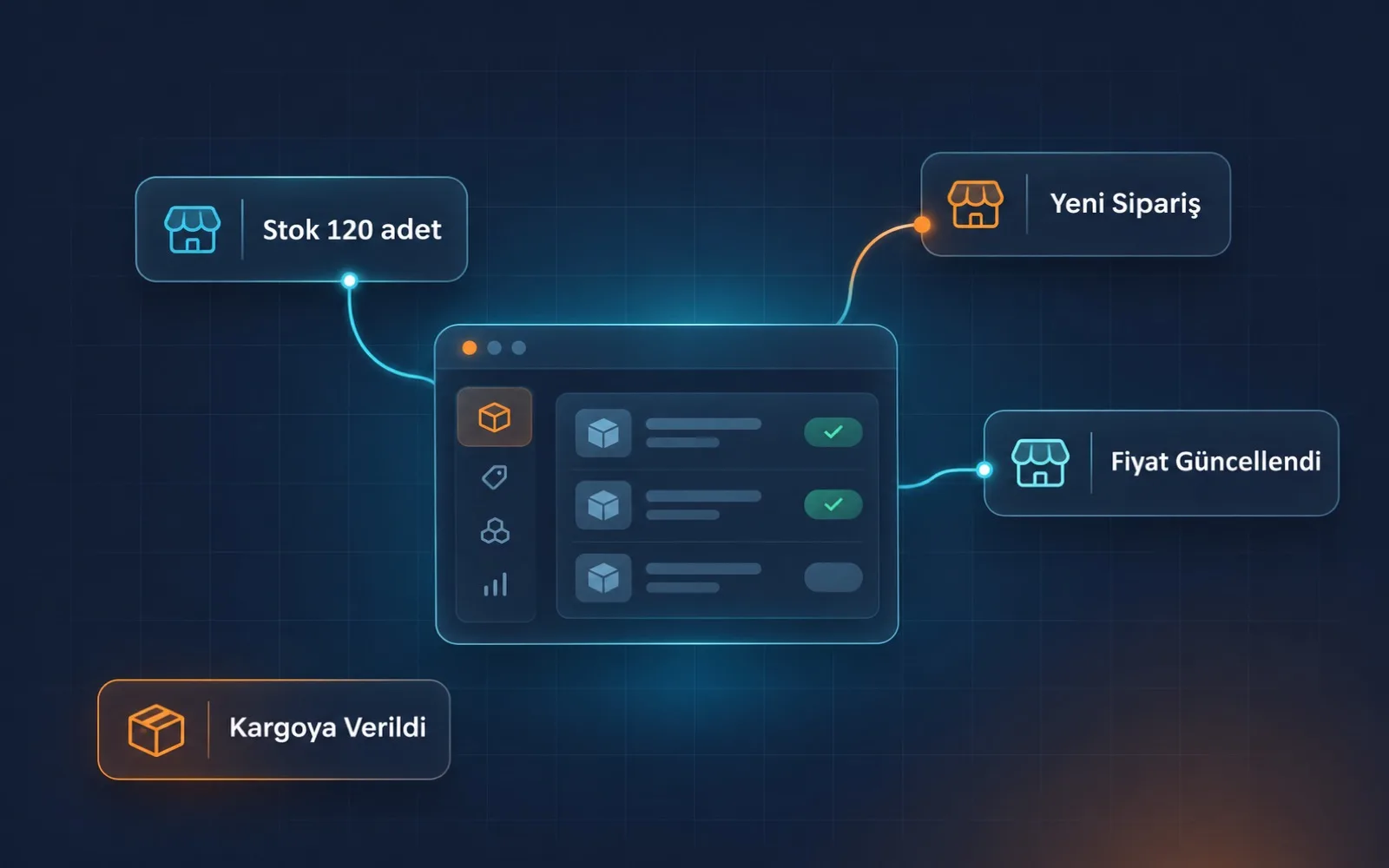
Businesses that want to take an existing physical store online may need integrated solutions that keep product and inventory information up to date both in store and online. For companies aiming to manage multiple points of sale from one place, API and system integrations and custom projects compatible with ERP and CRM come to the fore.
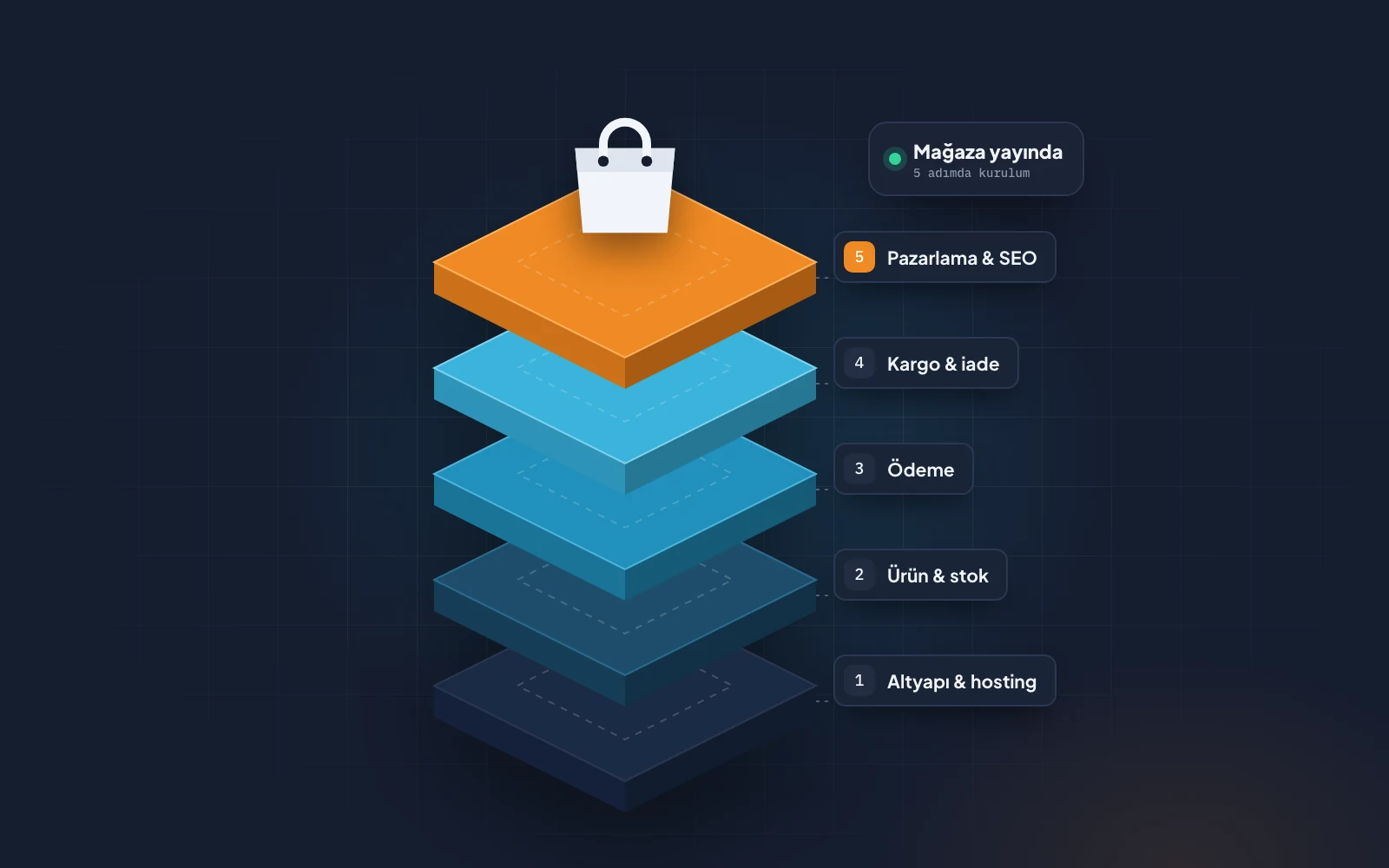
How to Build an Ecommerce Website: Step-by-Step Setup Process
- Defining the Business Model and Goals: Clarify the industry, target audience, regions you sell to and short- and long-term goals.
- Choosing a Domain Name and Brand: Research and register a short, memorable domain name that reflects your brand.
- Choosing an Ecommerce Platform: Determine the best fit among off-the-shelf platforms, WooCommerce or a custom software solution.
- Design and User Experience: Choose a fast, mobile-friendly design suited to your target audience. Plan the visual identity and the user journey.
- Product and Category Management: Create product categories and add products with full details. Prepare variations, inventory, prices, descriptions and images.
- Payment Infrastructure: Sign up with a virtual POS provider or payment institutions and integrate them into the site.
- Shipping and Order Management: Select partner shipping carriers and set up automatic tracking and notification integrations.
- Testing and Launch: Test the order, payment and shipping processes. Once issues are fixed, the site goes live.
How Do You Choose an Ecommerce Platform?
When choosing an ecommerce platform, businesses should consider their business model, product portfolio, integration needs and budget.
The three most popular core options can be summarized as follows:
- Off-the-Shelf Ecommerce Platforms: Easy to use and usually quick to set up. Suitable for businesses with a well-defined scope.
- WooCommerce: A WordPress-based, open-source plugin solution that is flexible but manageable with basic technical knowledge.
- Custom Ecommerce Software: Developed around your own needs, offering high scalability and full integration.
Off-the-Shelf Platforms, WooCommerce and Custom Software Compared
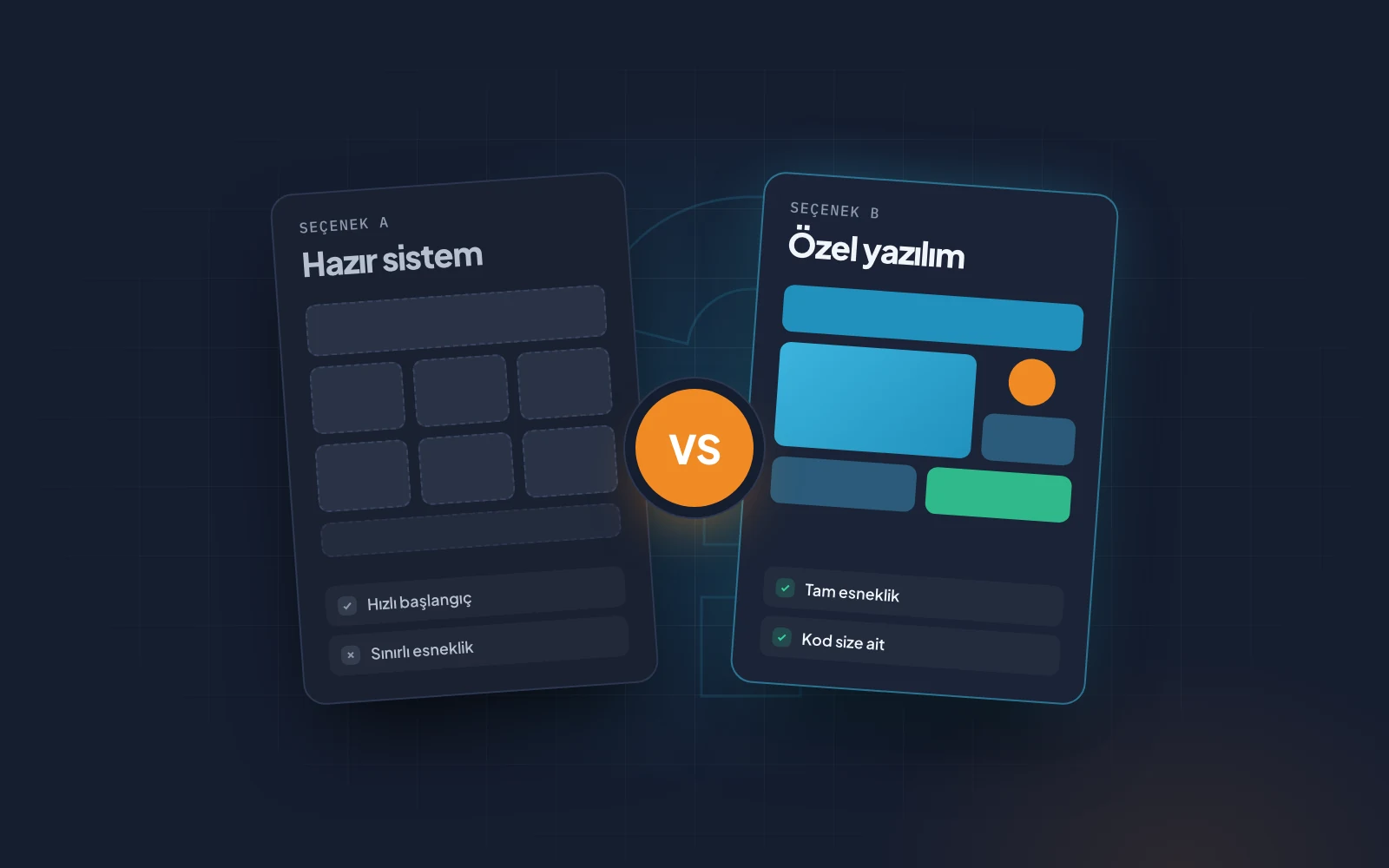
- Upfront Cost: Off-the-shelf platforms can be low-cost to start. With WooCommerce, development, hosting and plugins cost extra. Custom software requires a higher initial investment.
- Customization Flexibility: Limited on off-the-shelf platforms. WooCommerce allows partial customization. Custom software is developed entirely around your needs.
- Technical Maintenance: On off-the-shelf platforms, the provider is responsible for the infrastructure; with WooCommerce and custom software, the business is.
- Integration Options: Off-the-shelf platforms offer a set of standard integrations. Custom software makes any system or API integration possible. WooCommerce can be extended with many plugins.
- Scalability: Off-the-shelf platforms are generally suited to medium volumes. Custom software is a better fit for businesses that need heavy integration and scalability.
- Data Portability: Migrating data from a platform that shuts down or is replaced can be difficult with off-the-shelf solutions; custom software offers more flexible portability.
- Long-Term Costs: Off-the-shelf platforms involve ongoing monthly/annual subscriptions. With WooCommerce, every plugin and hosting cost adds up. Custom software requires ongoing maintenance and development, but there is no licensing requirement.
Off-the-Shelf Ecommerce Site or Custom Ecommerce Software?
Choosing the right solution means focusing on the size of the company, specific needs and long-term goals. Off-the-shelf platforms offer speed and a low upfront cost in the short term; they suit businesses with few products and limited feature needs that want to open an online store quickly.
As feature and integration needs grow, custom development comes to the fore. To work in full integration with accounting software, an ERP or multiple sales channels, consider custom software development.
With our Custom Software Development and API and System Integrations services, you can manage your processes in a way tailored to you.
Features Every Ecommerce Website Should Have
- Product and Category Management: Main and subcategories; adding products, managing variations (color, size) and bulk updates.
- Inventory Tracking: Automatic and manual inventory updates to minimize overselling.
- Cart and Checkout: A cart system where visitors can easily add products and use coupons or discount campaigns.
- Payment Infrastructure: Credit card, bank transfer/EFT and cash-on-delivery options via a virtual POS or payment institutions.
- Order and Shipping Management: Order status tracking, shipping integrations and easy order tracking for customers.
- Campaign Management: Tools for designing and running campaigns by time, category or product.
- Customer Account: Features such as sign-up, login, address management, order history and password reset.
- Admin Panel: Sales reports, customer analytics, product management and user permissions.
Ecommerce Website Cost in 2026
Building an ecommerce website involves various cost items, such as software licenses, design and development, domain and hosting, payment and shipping integrations, the admin panel, maintenance and updates, integrations and marketing expenses. Costs vary according to the scope of each site.
For example, an off-the-shelf platform that an entrepreneur selling boutique products needs can be launched at low cost and maintained on a monthly payment plan, while a large business that wants to manage inventory and its supply chain automatically across all sales channels may allocate additional resources for custom software development and system integration.
License, maintenance and hosting costs should also be factored into long-term planning.
Do You Need a Company to Build an Ecommerce Website?
In Turkey, opening an ecommerce website and selling online requires setting up a company in most cases. Tax obligations, invoicing, payment provider integrations and official filings are managed under a registered trade name.
However, which legal form or processes you need depends on your line of business and the payment and shipping companies you work with. For requirements related to ETBİS (Turkey's e-commerce information system registry), KVKK (Turkey's Personal Data Protection Law), distance sales agreements, pre-contract information and consumer legislation, it's advisable to follow the latest information from official authorities. Every business should also seek the opinion of an expert accountant or legal advisor.
Payment and Shipping Integrations
A successful ecommerce website requires payment and shipping processes to work seamlessly.
With a virtual POS or licensed payment institutions, you can offer different options such as online payment, bank transfer/EFT and cash on delivery.
Integration with shipping carriers allows orders to be sent automatically to the relevant carrier, with a tracking code generated and the customer notified. Offering more than one shipping option has a positive effect on customer experience and sales conversion.
All of these steps may require custom development or integration solutions (take a look at our API and System Integrations service).
How Do You Do Ecommerce SEO?
An ecommerce website needs technical and content-based SEO work to earn organic traffic and win customers.
- Category and Product Pages: Make sure every category and product has a unique title, description and images.
- Technical SEO: A sitemap, robots.txt, correct redirects and mobile-friendly code are required.
- Structured Data: Structured data markup is used for fields such as product name, price, stock and reviews.
- Site Speed: Load times are reduced with fast server infrastructure, optimized images and caching.
- Mobile Friendliness: Google places high value on mobile usability.
- Original Content: Avoid duplicate content and create detailed, useful content about your products.
For more advanced needs, see our Ecommerce SEO Services and Search Engine Optimization (SEO) Services pages.
How Do You Attract Customers to an Ecommerce Website?
- Google Ads: Reach sales-focused traffic right away with search and shopping ads (visit our Google Ads Management page).
- Meta (Facebook/Instagram) Ads: Win new customers and run retargeting with ads tailored to your target audience.
- Organic Search: SEO work opens your product and category pages up to organic traffic.
- Content Marketing: Blog posts and guides help build both SEO and trust.
- Retargeting: Drive conversions with personalized ad setups based on abandoned carts and browsing data.
Common Mistakes When Building an Ecommerce Website
- Choosing the Wrong Platform: Picking a platform based only on price, without considering long-term needs, can cause problems later.
- Insufficient Product Information: Missing, short or duplicate product descriptions reduce site traffic and conversion rates.
- Complicated Checkout: Long and confusing payment steps can cause customers to leave before completing their purchase.
- Poor Performance: Sites that load slowly and don't work well on mobile lose customers.
- Missing Integrations: Handling steps such as inventory, orders and shipping manually creates an error-prone process.
Frequently Asked Questions
- What legal steps should I follow to build an ecommerce website?
Answer: Steps such as company formation, domain registration, tax obligations and ETBİS registration are required. We recommend checking the latest regulatory changes from official sources. - What is the biggest difference between off-the-shelf platforms and custom software?
Answer: Off-the-shelf platforms offer a quick start and standard features, while with custom software every process is developed and integrated around your needs. - Is WooCommerce enough for small businesses?
Answer: WooCommerce can be a good option for boutique businesses that start with basic product management and don't need many custom integrations. - Can I set up the shipping integration myself?
Answer: If you don't have technical knowledge, getting professional support or an integration service speeds up your processes and reduces the risk of errors. - How can I improve my site's SEO performance?
Answer: A mobile-friendly structure, fast hosting, unique titles and descriptions, quality content and technical SEO optimizations all help. - What does the cost of building an ecommerce website depend on?
Answer: Platform choice, custom features, integration requirements, number of users and maintenance needs all affect the cost.
Conclusion
Building an ecommerce website starts with choosing the right platform for your business model, budget, scalability goals and integration requirements. Choosing a scalable and reliable solution as your business needs change gives you an edge over your competitors.
Reach us through our Ecommerce Software Development page to explore our tailored ecommerce solutions and technology consulting services. If you'd like support in building a successful online store with the right steps, get in touch.
Author
Enes Şahin
Writes on the Hun Digital blog