
The cost of getting a corporate website built remains a key topic for business owners in 2026. Website pricing varies from project to project; it's almost impossible to talk about a standard price. In this comprehensive guide, you'll find all the criteria and comparisons that determine costs so you can plan your budget correctly.
Website Cost 2026: Why Does the Price Vary?
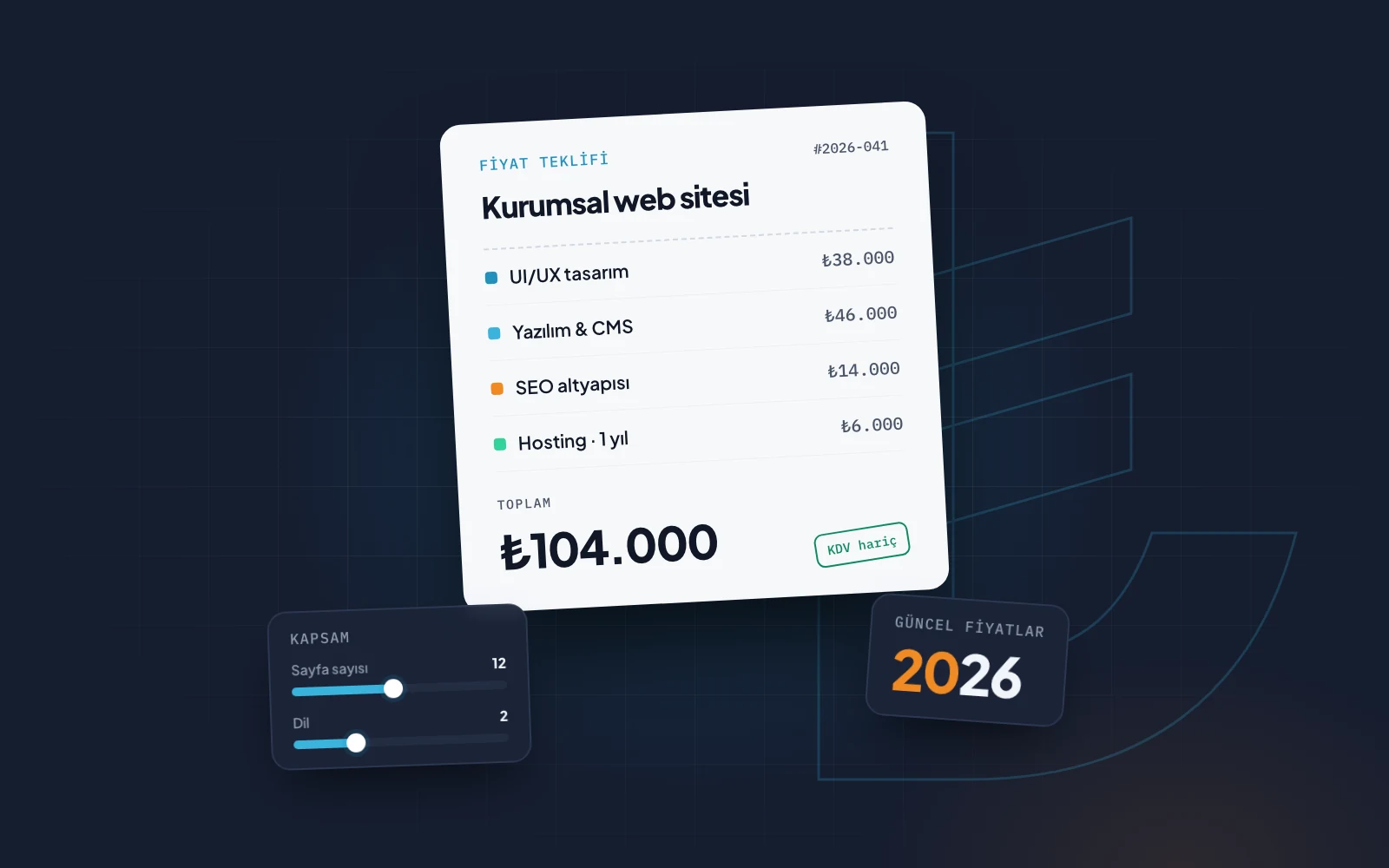
There is no single price list for "website pricing." Every project has a different scope, technical needs and goals. For example, a portfolio site and a corporate website don't fall into the same category. Many factors, from the platform you use to the features offered, directly affect the total price. Clarifying your goals and requirements is the first step in the pricing process.
What Determines Website Pricing?
Design and User Experience
Web design pricing varies depending on whether you choose a template or a fully original interface. Design support is essential for interfaces that reflect your corporate identity, are mobile-friendly and are easy to manage.
Number of Pages and Content Structure
The variety of services or products your business offers directly affects the number of pages you need. Standard sections such as the home page, about us, services, products and contact form the baseline. Additional conversion-focused pages can also increase the cost.
Functionality and Integrations
Features such as bookings, appointments, contact forms, product filtering or system integrations have a big impact on website pricing. If integration with an external CRM, ERP or payment system is required, the technical requirements should be clarified at the start of the project.
Admin Panel and Content Management
An admin panel is needed to update content on your website easily. Off-the-shelf packages come with limited fields, while custom software lets you organize every field around your business model.
Multiple Languages and Localization
For businesses entering international markets, offering multiple languages is a significant advantage. Being able to control all content from the admin panel, however, brings additional work and testing.
Technology Stack
The cost of building a website also depends on the technologies used. Technologies such as Laravel, PHP, MySQL, React or Next.js determine the scalability and long-term usability of the solution.
Corporate Website Cost: Differences Between SMBs and Large Companies
Cost and scope differ between the website a small business needs and the projects of a large enterprise.
- SMBs usually make do with a standard number of pages, core services and contact forms.
- Enterprise solutions, on the other hand, emphasize multiple languages, an advanced admin panel, custom software modules, permissions and integrations.
When evaluating costs, your business goals, how much support you want along the way and sustainability all play an important role. For forward-looking investments, getting Corporate Web Design consulting will make things easier.
Off-the-Shelf Template, WordPress or Custom Design: Which Should You Choose and When?
The main options for anyone looking to have a website built are:
- Off-the-Shelf Templates: Suitable for those who want to go live quickly at low cost. Designs are mostly similar and flexibility is low.
- WordPress-Based Sites: Stand out with extensive theme and plugin support. The admin panel is easy to use, but large, high-traffic sites may need special optimization. Customizations are possible through themes or plugins.
- Custom Software: All features and the interface are planned from start to finish around the business. Data structure, security, original design and integrations are fully under control. Custom Software Development is for those looking for this solution.
Comparison Table
- Upfront Cost:
Off-the-shelf templates offer the lowest entry cost, WordPress sits in the middle, and custom software requires a higher initial investment depending on project scope. - Customization and Flexibility:
Options are limited with off-the-shelf solutions, WordPress can be extended with themes and plugins, and with custom software every detail is built from scratch. - Maintenance and Updates:
Off-the-shelf platforms handle updates centrally, but theme changes can be difficult; WordPress has broad community support, but security updates must not be neglected. With custom software, maintenance and updates should be planned regularly; flexibility is high. - Scalability:
Limited with off-the-shelf site builders; WordPress allows growth up to a point; custom software makes it possible to build long-term, highly scalable platforms. - Integration:
Integrating with external systems is hard on off-the-shelf sites, WordPress may require extra plugins and custom development, and with custom software you can design integrated solutions that fit your business processes.
Ecommerce Website vs. Corporate Website Cost Comparison
Ecommerce projects involve very different requirements from a standard corporate brochure site. Ecommerce Software Development solutions include:
- Payment infrastructure (virtual cards, banks, digital wallets)
- Inventory management and product catalogs
- Order, invoice, shipment and customer tracking modules
- Shipping, SMS and accounting integrations
- Advanced features such as campaign management, reporting and product filters
Cost increases in ecommerce projects depending on the software platform and the systems integrated. In standard corporate website projects, these integrations are usually optional.
Additional Costs When Setting Up a Website
- Domain and Hosting: Domain registration and reliable hosting are the foundation of any web project.
- SSL Certificate: Required for secure access and data traffic, and indispensable for ecommerce and membership sites in particular.
- Email and Licenses: Professional business email addresses and software licenses create additional costs.
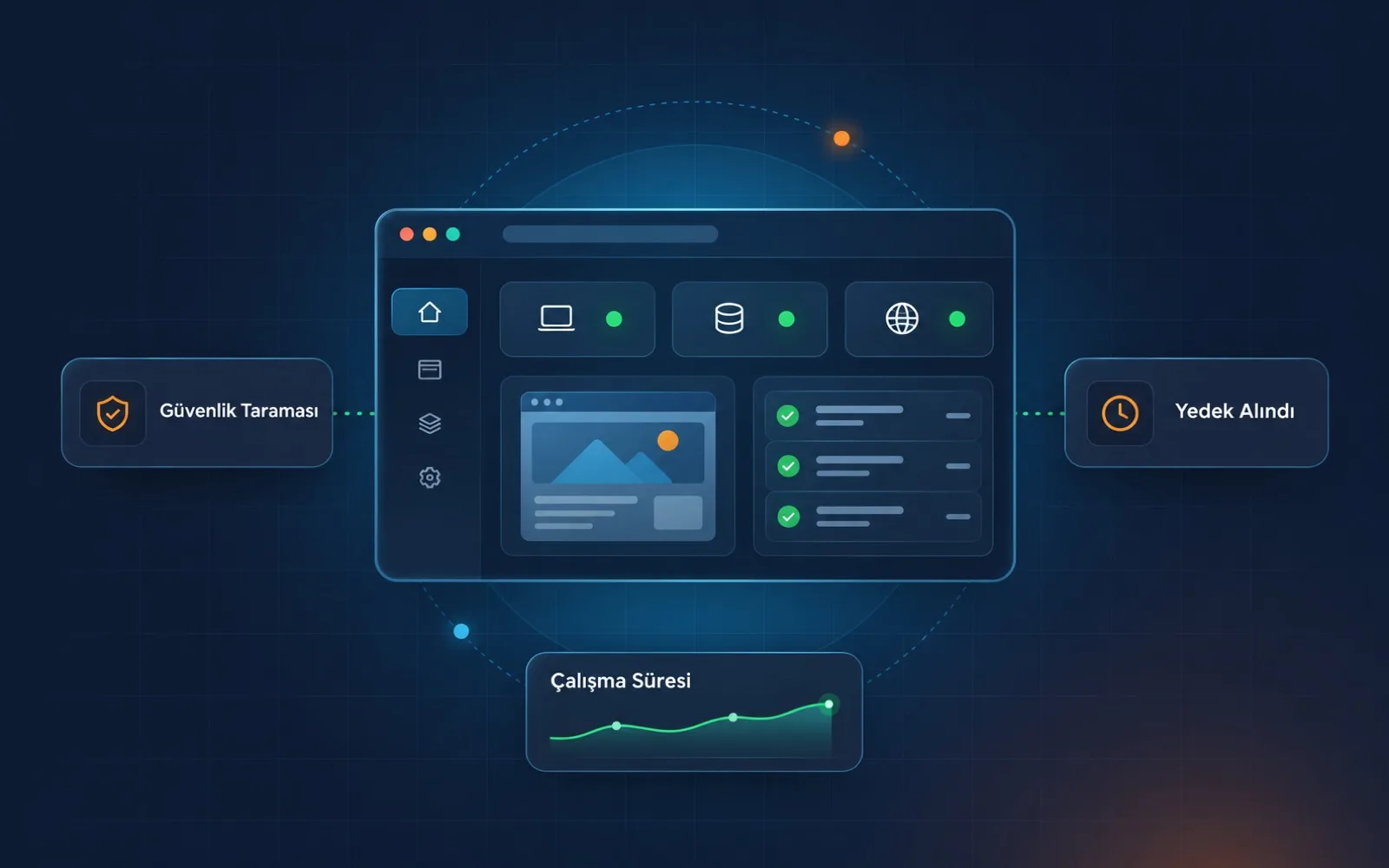
- Maintenance, Security and Backups: After the website goes live, regular updates, data backups and security checks are important. Website Maintenance and Technical Support helps at this stage.
- Content Production: Copy, image and video production should be planned to create quality, original content.
Why Does an SEO-Friendly Website Matter?
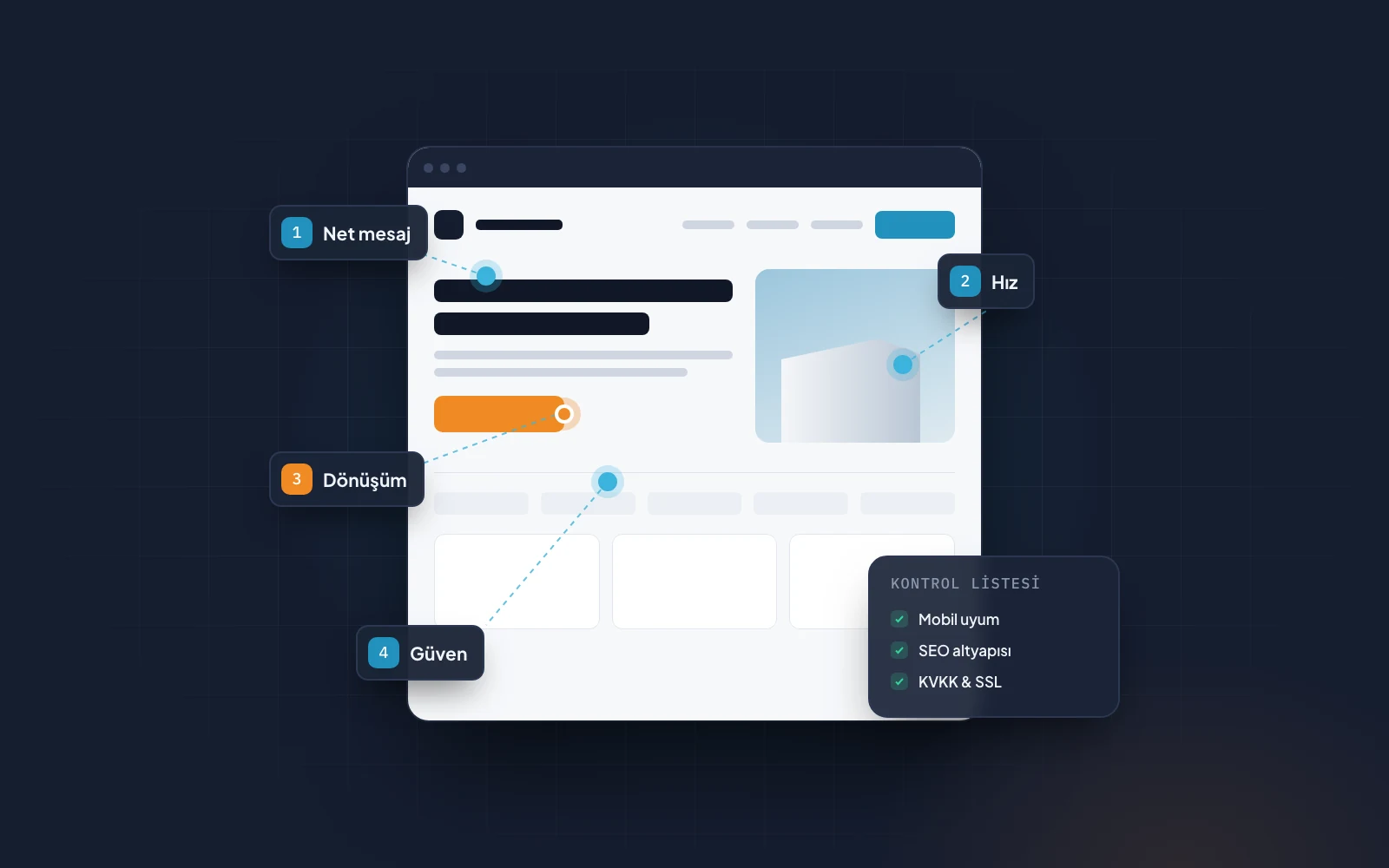
SEO readiness should be a deciding criterion in corporate website pricing and your investment decision. For visibility in search engines, your website needs strong technical infrastructure, mobile friendliness, SEO consulting and solid Core Web Vitals performance.
- Technical SEO: Elements such as page speed, URL structure, sitemap and schema affect the health of your site.
- Mobile Friendliness and Accessibility: Testing is a must to ensure the site works smoothly on every device and is easy for users to access.
- Page Speed and Core Web Vitals: Optimizing for Google's user experience-focused scoring system is necessary for both visitor satisfaction and search rankings.
What to Look for When Getting a Website Built
- Source Code and Ownership: Owning the source code of the software developed makes it easier to manage your project.
- Admin Panel Access: Ask whether you'll be able to make content updates yourself.
- Updates, Support and Maintenance: Regular support should be planned for technical needs that may arise later.
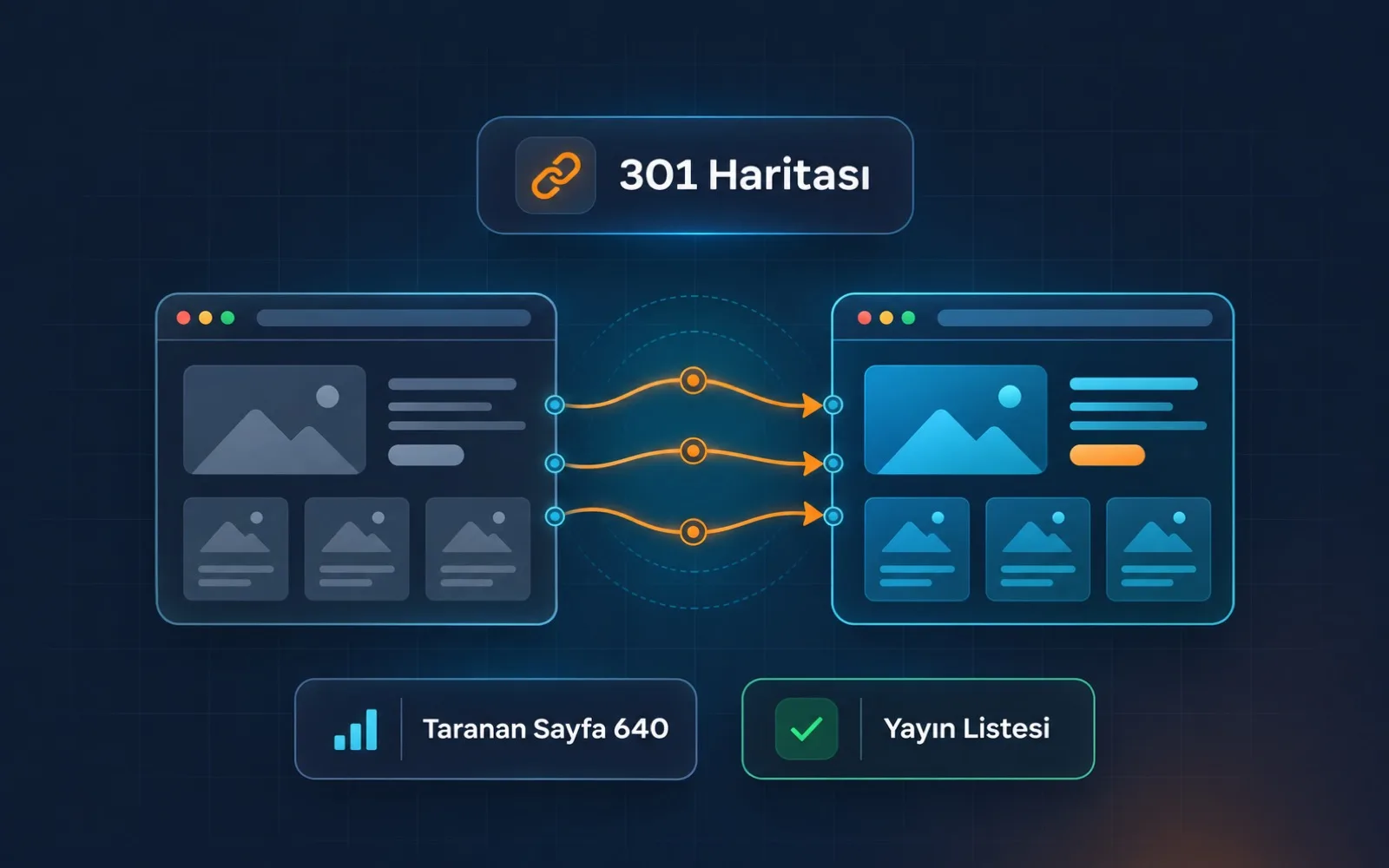
- Data Portability: Flexibility should be provided for site migrations or platform upgrades.
- Contract Terms: Make sure every detail is included in the project contract.
Questions to Ask When Getting a Website Quote
- Will the design be entirely custom for you, or based on an off-the-shelf template?
- Can we make changes to content and pages after the site goes live?
- Which processes do maintenance and technical support cover?
- Which items create additional costs (domain, hosting, licenses, backups)?
- Will you have access to the data and source code on delivery?
- Will the integration and API support meet your needs?
- Which technical and content optimizations are provided for SEO?
- How open is the site's platform to new features in the future?
Frequently Asked Questions
- How is corporate website pricing calculated? Technical requirements, number of pages, functionality, design type, the admin panel and integration options make up the total cost.
- Should I choose WordPress or custom software for my business? WordPress may be enough for low-budget projects that need to go live quickly. However, companies with high traffic, advanced feature needs or a desire for an original interface should choose custom software.
- What additional expenses are there beyond the cost of building the website? Domain, hosting, SSL, email, licenses, content production, maintenance and update costs should be evaluated separately.
- Can we get the source code when the website is delivered? The source code can be handed over to your company, provided it is specified in the project contract.
- Why do ecommerce sites and corporate brochure sites cost different amounts? Ecommerce projects include payment, inventory, order and integration modules, so the development scope and technical infrastructure are broader. This affects budget planning.
- Why is it important to build an SEO-friendly website? SEO readiness is a basic requirement for your site to rank high in search engines. Page speed, mobile friendliness and content optimization contribute directly to success.
Conclusion: Define Your Needs and Get a Clear Quote
If you're planning a website investment in 2026, the right approach is to first clearly define your business goals and expectations. Every project's cost analysis is different; clarifying the scope ensures a transparent and sound quoting process. To discuss pricing in detail and evaluate solutions tailored to your business, visit our Corporate Web Design, Custom Software Development and Ecommerce Software Development service pages. Contact us for a comprehensive analysis and consultation!
Author
Enes Şahin
Writes on the Hun Digital blog