
Are you still issuing paper dispatch notes when goods leave the warehouse? Copies get lost, they don't match the invoice and the truck ends up on the road with incomplete paperwork. e-İrsaliye (Turkey's electronic dispatch note) is an electronic document designed to solve these problems. In this article, we explain what it is, who it applies to and how to plan the switch.
What Is e-İrsaliye?
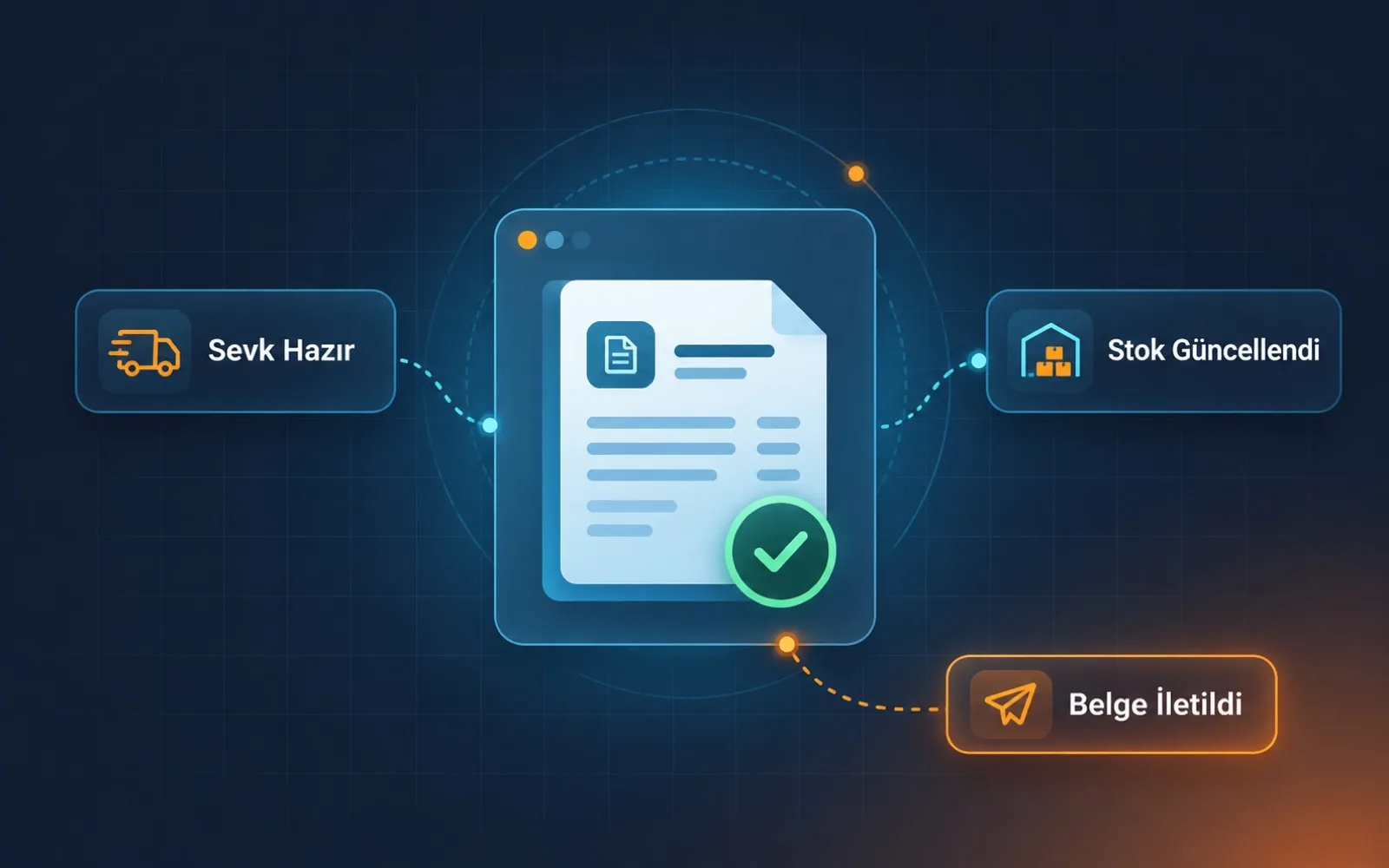
e-İrsaliye is the electronic version of the dispatch note, issued, sent and stored digitally. It does the same job as a paper dispatch note: it documents that goods are being moved from one place to another. The difference is that the document reaches the recipient through the system of the Revenue Administration (GİB, Turkey's tax authority) without ever being printed.
The document is created in a standard data format and signed with a financial seal or an electronic signature. The recipient sees the document in their own system. If they wish, they can report missing or excess goods with a dispatch note response.
What Is a Dispatch Note Response For?
In the paper system, the recipient usually reports missing goods by phone or by jotting down a note. That information often gets lost. In the electronic system, the recipient reports the quantity received back through the system. The sender also sees, on record, which shipment had a discrepancy. This way, quantity differences are settled before the invoice is issued, and later disputes are reduced.
How Is It Different from a Paper Dispatch Note?
Both documents serve the same purpose, but they work quite differently.
| Topic | Paper dispatch note | Electronic dispatch note |
|---|---|---|
| Issuing | Pre-printed booklet, by hand or printer | Through software or a portal |
| Delivery | The document travels physically with the goods | Reaches the recipient electronically |
| Storage | Requires binders and archive space | Stored electronically |
| Error risk | Illegible handwriting, missing copies | Mandatory fields are validated by the system |
| Matching with invoices | Checked manually | Can be matched automatically by software |
The biggest gain is that data isn't entered over and over again. Information created in the warehouse flows to accounting, and from there to the invoice, through the same record.
Who Should Use the Electronic Dispatch Note?
The obligation to switch to the electronic dispatch note is set by regulations published by Turkey's Ministry of Treasury and Finance. In general, these criteria are decisive:
- The business's gross sales revenue in the previous year
- The sector it operates in (some sectors have separate rules)
- Production, import or trade of certain products
- Activities that operate under a license or permit
Threshold amounts and transition dates are updated from time to time, so we don't quote figures here. Check your own situation against GİB's e-Document announcements and the current regulations, and consult your financial advisor. Businesses that aren't required to switch can also join the system voluntarily.
Another important point is the status of the other party. Even if you've switched to the system, if your recipient isn't registered, the way the document is issued may change. That's why knowing in advance which document type your customers and suppliers use saves you from surprises on shipping day. Most software and integrators let you check whether a recipient is registered.
How Is an Electronic Dispatch Note Issued?
There are three main ways to connect to the system. Which one is right depends on the number of dispatch notes you issue and the software you use.
GİB Portal
Through the free portal provided by GİB, dispatch notes are created manually. This can be enough for businesses that make only a few shipments. However, because each document is entered one by one, it leads to lost time and errors at busy companies.
Private Integrator
A private integrator is an intermediary company authorized by GİB that transmits documents on your behalf. The business connects its own software to the integrator's service. Documents are created and transmitted automatically. Most businesses choose this route because the integrator takes care of the technical infrastructure.
Direct Integration
It's also possible to connect your own IT system directly to GİB. This route requires high document volume and a strong technical team. The application and testing processes take longer. Responsibility for security, uninterrupted operation and archiving also falls entirely on the business. That's why it's generally chosen by very high-volume companies.
Why Does ERP Integration Matter?
Issuing dispatch notes from a separate screen is only half of the move from paper to electronic. The real efficiency comes when the dispatch note is generated automatically from the business's core software. If you're curious about what ERP does, you can read our article on ERP software.
- The dispatch note is created automatically when a shipping order is approved.
- Stock is reduced at the same moment the goods leave.
- Customer, vehicle, driver and address details aren't re-entered.
- Dispatch notes can be converted into invoices in bulk.
- The dispatch note response from the recipient is matched with the relevant shipment.
This connection is set up between your software and the services the integrator provides. For different systems to communicate reliably, the API and system integrations side needs to be designed correctly.
Sector-specific needs also matter here. For example, in rebar trading, tonnage, diameter and length information must be reflected correctly on the dispatch note. Our rebar ERP solution was developed to connect sector-specific fields like these to the shipping process. The rebar ERP rollout we did for Tokal Grup is a real-world example of this approach.
What Are the Steps to Switch?
- Clarify your status: Check with your financial advisor whether you're required to switch and, if so, your transition date.
- Get a financial seal or e-signature: It's required to sign documents.
- Choose the method: Decide between the portal, a private integrator or direct integration.
- Prepare your software: Check whether your ERP or accounting software supports electronic documents. If it doesn't, plan an integration.
- Clean up your data: Customer and supplier accounts, tax numbers, addresses and product codes must be accurate.
- Test: Try out the flow with sample documents before starting real shipments.
- Train the team: Warehouse, shipping and accounting staff need to know the new process.
- Shut down the paper process: Running both systems in parallel after the switch creates confusion.
Keep a close eye on documents during the first weeks after the switch. Assigning someone to check rejected or pending dispatch notes every day keeps small errors from piling up. Frequently recurring errors usually stem from missing account details or incorrect product codes. Fixing them at the source keeps subsequent documents clean too.
What Are the Common Mistakes?
- Leaving it to the last minute: Integration and testing take time. A rushed switch disrupts shipments.
- Not knowing the recipient's status: If the recipient isn't registered in the system, the process works differently. Check your account list in advance.
- Correcting a faulty document the wrong way: How a sent document is corrected or canceled is governed by rules. Follow the regulations and your integrator's guidelines.
- Not linking it to stock: If the dispatch note is electronic but stock is reduced manually, the data stays inconsistent.
- Skipping vehicle and driver information: If transport details are entered incompletely, the document can cause problems in the field.
How We Approach It at Hun Digital
We don't treat the electronic dispatch note as a separate module but as a natural step in the shipping process. First we map out the current flow: Where is the order created? When is stock reduced? When is the invoice issued? Then we build the connection between your ERP and your chosen integrator and verify the flow with test documents. We leave the interpretation of regulations to your financial advisor.
Frequently Asked Questions
- Is e-İrsaliye mandatory?
It's mandatory for businesses that exceed a certain revenue threshold or operate in certain sectors. Since thresholds and dates can change, follow GİB's announcements and consult your financial advisor. - Are e-İrsaliye and e-Fatura the same thing?
No. The dispatch note documents the transport of goods, while e-Fatura (Turkey's electronic invoice) documents the price of the sale. They are separate documents but can be linked in software. - Can I switch if I'm not required to?
Yes, voluntary switching is possible. For businesses with high shipping volume, it reduces paper costs and the risk of errors. - Does a paper printout need to be kept in the vehicle?
How the document is presented during transport is set by regulations. Confirm current practice with GİB's guides and your financial advisor. - What should I look for when choosing a private integrator?
GİB authorization, a service compatible with your software, support quality and archiving terms are important. - What should I do if my current ERP doesn't support the electronic dispatch note?
Replacing the software isn't always necessary. In most cases, an integration layer can be set up between the existing system and the integrator.
Conclusion
Switching to electronic documents reduces lost paperwork and manual data entry. But the real gain comes when the document flows through the same system as stock, shipping and invoicing. When planning the switch, handle the regulatory side with your financial advisor and the software side with your technical team. If you'd like to set up a flow that fits your business, take a look at our ERP and CRM software development service.
Author
Enes Şahin
Writes on the Hun Digital blog